
The Most Useful AI Startup

AMESA invited & sponsored me to dive into their platform and learn about their tech stack, their methodology, their customer base, their roadmap, and what they’ve achieved. Here’s my take.
The man who designed 200+ AI agents at Microsoft
In 2019, I was the AI Strategy Lead for Microsoft U.S. and an SVP from a Fortune 500 customer I was partnering with wanted an autonomous AI system for one of their manufacturing plants.
I asked around internally and the unanimous answer was: “You need to connect with Kence Anderson.”
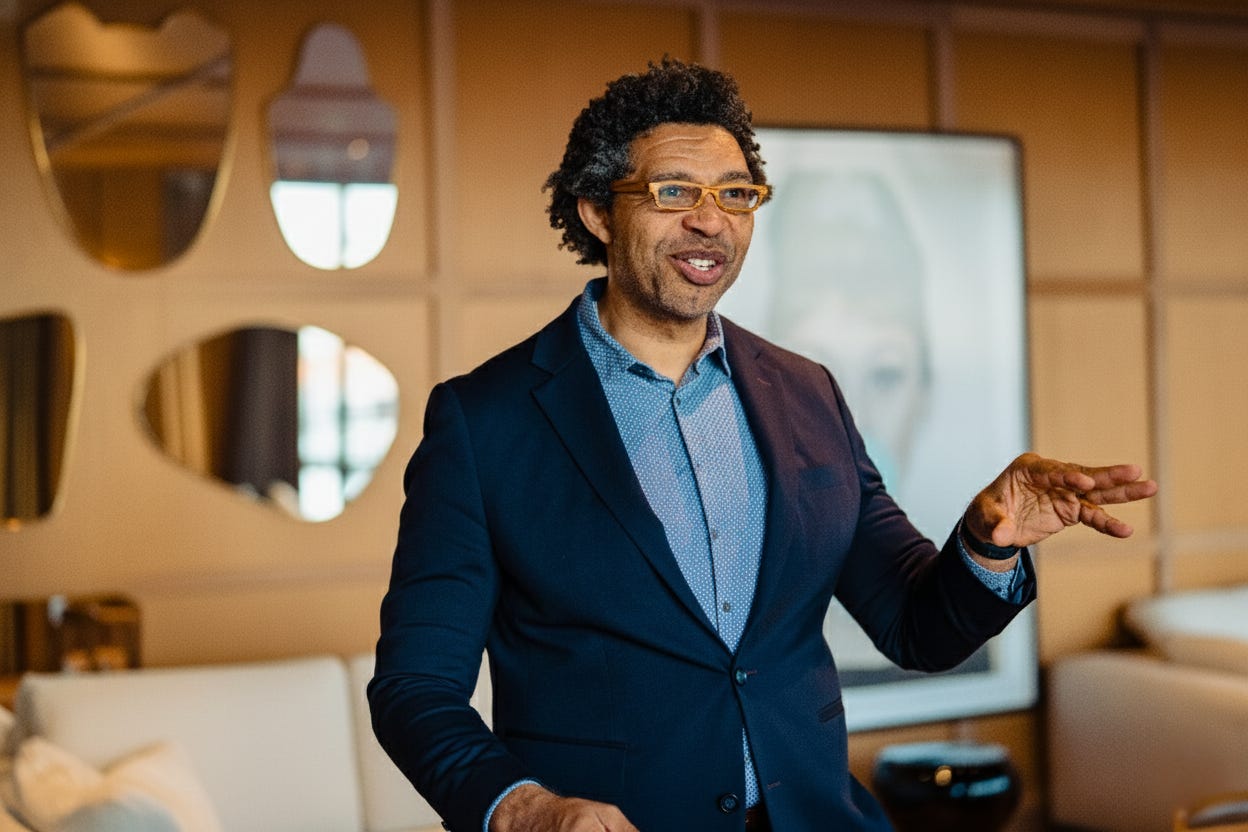
Kence worked in Microsoft Research and had been acqui-hired as part of an acquisition of an autonomous systems startup in 2018.
Kence had designed over one hundred autonomous systems for clients by the time I met him, and introduced me to a concept called “Machine Teaching” (first introduced by researchers at Microsoft in 2017), which opened the aperture for thousands of use cases there weren’t possible or were too expensive with machine learning.
If you haven’t heard of machine teaching, here’s a simple explanation:
Machine Learning focuses on the “learners” (machines/algorithms). Machine Teaching focuses on the “teachers” (human experts).
Machine Teaching decouples knowledge about machine learning and data science from the process of translating human expertise to machine language, and it opens up a world of new capabilities that aren’t possible with machine learning. It will be a core capability for any organization hoping to achieve Autonomous Transformation.
Does it replace machine learning? No. It’s more like having a screwdriver when you’ve been using a hammer. We still need both, and which tool you should use depends on what you’re working to achieve.
If you want to learn more about Machine Teaching, you can enroll in Kence’s free Coursera/University of Washington course or you can read his book Designing Autonomous AI (O’Reilly, 2022).
The startup that achieves 7-figure ROI consistently
In February 2023, while everyone was talking about ChatGPT, Kence and I were talking about how GenAI posed a distraction from the potential of autonomous systems. We decided to address the issue from 2 angles.
I left Microsoft to found The Future Solving Company, launch my book (Autonomous Transformation), and help organization develop a vision and strategy for the future of work, leadership, creating new growth categories, moonshots, and how they want to position themselves in the era of AI.
Kence left Microsoft to start a company that builds and orchestrates autonomous AI agents that can actually be put into production because they don’t hallucinate: AMESA.
Why don’t they hallucinate, Brian?
Because they don’t have LLMs in the decision layer.
They don’t have “mouth-for-brains.”
They’re built using the Machine Teaching methodology. And what they’ve built is phenomenal.
In 2024, I started officially partnering with Kence and AMESA. When everyone was talking about Prompt Engineering, we came up with a new term we introduced in a VentureBeat article: Intelligence Engineering.
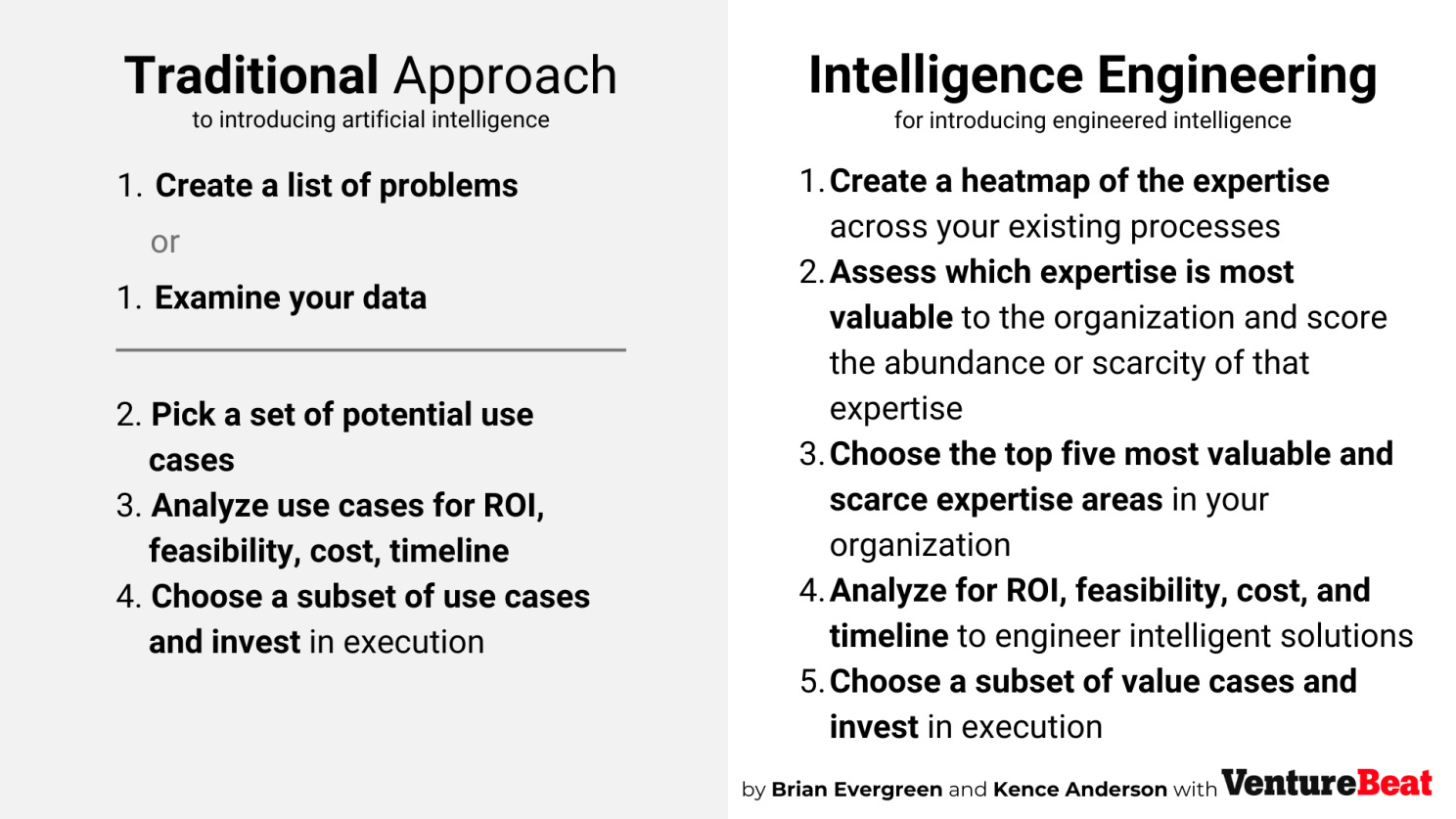
In 2025, we hosted dinners together for Fortune 500 and public sector leaders in Detroit, Seattle, and Washington D.C. - spreading knowledge and frameworks for building real-world, practical AI agents.
Other Agentic AI startups saw my article with Kence and our dinners together and reached out to me and asked me if I would post about them, cohost dinners with them, etc. but I graciously declined because AMESA is the only agentic AI platform I’ve seen to which I can give my full endorsement.
If you’re swimming in the sea of Agentic AI startups and well-meaning-but-broken-promises and you’re looking for a lighthouse, reach out to Kence and the team at AMESA. What they’re building is practical, real, rooted in a proven methodology, and is not an attempt to ride the LLM hype cycle or a rebrand from something else.
On top of that, Kence Anderson is a trustworthy person who is solving for a future where we all can create more value in partnership with autonomous systems.
If you would like an introduction, feel free to reply to this email and I’ll connect you with the team.
Thanks for reading,
Brian
Whenever you’re ready, here are 5 ways I can help you:
1. Future Solving Podcast: My weekly show (in partnership with Thinkers50) that explores how top thinkers, business leaders, and technologists solve for the future. Previous guests include Rita McGrath & Whitney Johnson.
2. Sponsor & Cohost a Future Solving Club Breakfast, Dinner, or Virtual Event: The Club hosts breakfasts and dinners in dozens of cities and virtually, in partnership with top enterprise companies, startups, and consulting firms. Here are a few examples: London, Seattle, New York. When we convene these leaders (VP through C-level from over 200 of the Fortune 500) with world-renowned thought leaders to discuss the most pressing topics of today, our cohosts deepen client relationships and expand their network.
3. LinkedIn Learning Course: A 48min introduction to Future Solving in a course called Organizational Leadership in the Era of AI. Join 17K+ learners who’ve taken the course and learned that “technology breakthroughs need management breakthroughs” and the basics of a new system of leadership purpose-built for the era of AI.
4. Keynote Speaking: I’ve lectured everywhere from The Wharton School to Mastercard to Microsoft HQ on AI, AI agents, strategy, future of work, leadership, and skills of the future. Learn more about booking me as a speaker
5. The Future Solving Program: Join 50+ of the FORTUNE 500 and NASA, who have positioned themselves for the future in the era of AI by leveraging new frameworks from the Future Solving Methodology I introduced in my book, Autonomous Transformation, to sidestep AI hype and ground their decision-making in a visible, strategic system built for today’s complexities.